Each month, we profile someone connected to CBRC, featuring them in The Update, our monthly newsletter. Check out the January 2026 newsletter here.
Not subscribed yet? Sign up for The Update here.
Andrew Barker (he/him) is the Vice-Chair of CBRC’s Board of Directors. Since 1996, he has been involved in various fields of gay men’s health and community-based research. He has also provided facilitation and strategic planning support for non-profit organizations.
Andrew grew up on the North Shore of Vancouver and completed his undergraduate studies in Business Administration at the University of British Columbia in the early ‘90s, where he came out between his third and fourth year. “That was toward the end of a big wave of the AIDS epidemic. I knew—as a young, gay man—that I was at risk,” Andrew says. “And I knew that there was a good chance that I was going to lose people.” This was the motivation for him to volunteer at YouthCO, founded in 1994 by youth leaders within the HIV and Hep C movements in B.C.
Early into the organization’s founding, Andrew then connected with CBRC’s founders Rick Marchand and Terry Trussler. He worked on several community-based research projects in the early 2000s, including the Gay Men’s Action Plan (GMAP) for the Man to Man Program at AIDS Vancouver (now Ribbon Community), looking at risk factors and social determinants of health for gay, bisexual, and men who have sex with men across Canada.
He was also involved in launching flagship CBRC initiatives, such as the Sex Now Survey and Summit. During recruitment for the very first Sex Now survey in June 2002, Andrew recalls that the team came equipped to Vancouver Pride with about a hundred or so clipboards. “We could not keep going fast enough! There was a thirst for it. At the same time, we had a lot of women coming up to us asking, ‘Can I do this? Where’s our survey?’” he says. “Those were the early inklings that we were onto something here.” The need for health research by and for people of diverse sexualities and genders was taking shape.
Looking back at the first edition of Summit, “there were maybe 100, 150 attendees, which we thought was a huge success,” Andrew says. Reflecting on the growth of the conference, he says that Summit is “now getting to a place where we are more representative” of diverse 2S/LGBTQIA+ communities. “In the early days, we weren’t as connected to academic institutions as we are today. We’ve moved in a direction where we are being recognized as a thought leader in queer and trans health.”
More than two decades after helping set some of the groundwork for 2S/LGBTQIA+ health research in Canada, Andrew is settling into a different pace of life. He currently runs an interior and landscape design studio where he works with a mix of non-profit, residential, and commercial clients. In his spare time, he enjoys being outside, canoeing, going to the beach, and working on his garden.
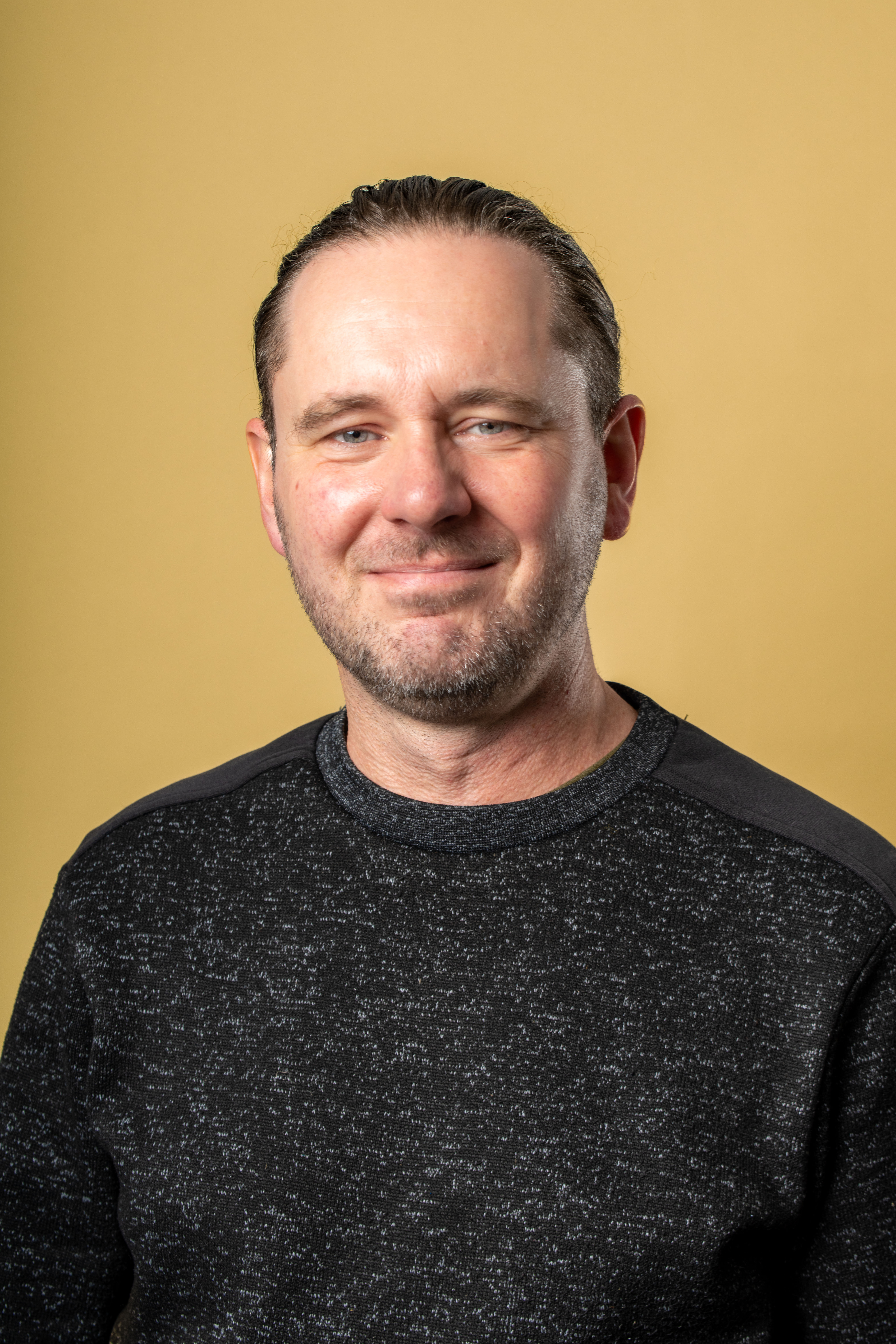
Photo: Andrew Barker
“A lot of CBRC’s early work was advocacy. When I started in the late ‘90s and early 2000s, a large portion of new HIV infections were still gay men. There was no research funding or support for gay men. Things have shifted since, but that’s what first engaged me—the idea of research being by and for gay men”
