A new needs assessment report by the Zetna Collective for Black Advancement, published by CBRC, Queering Black Prairie Futures, captures the experiences and hopes of Black 2S/LGBTQIA+ individuals in Edmonton, Alberta. It is based on the lived realities of people who have spent years, even decades, building lives in Canada, yet still face systemic racism and queerphobia in a city that prides itself on diversity.
“This project is a labour of love for Edmonton’s 2S/LGBTQIA+ Black community,” says Dawn Carter (she/her), Zetna Collective founder and president. “Although the body of knowledge about Black queer and trans people has grown over the past decade, Western Canadian voices have remained absent from the national conversation. My fundamental goal was to bring our distinct perspectives to the forefront.”
Born in England to Caribbean parents, Dawn arrived in Canada in the early 1970s. Her family settled in rural Alberta alongside other Caribbean immigrants, working as nurses and hospital staff. As a child, positive Black representation was scarce. When she came out to her family in midlife, Dawn understood deeply that young queer and trans people needed to see an older person who looked like them. As a Gen Xer with many younger friends, Dawn has witnessed the arcs of many of Edmonton’s Black queer and trans community members — from folks exploring their 2S/LGBTQIA+ identities in university, to growing into community activists.
It was through this network of community members that Dawn noticed a gap. “Community also noticed the gap,” Dawn says. She noticed programs for newcomers and refugees, but an absence that failed to account for the Black queer and trans experience overall. “We didn’t know who was going to pick up the ball and run for Black people; this was most likely due to capacity.” Arising from the need for a community-based organization focused on the social determinants of health of Black 2S/LGBTQIA+ folks, the Zetna Collective was born in 2024. And as a leader, Dawn wanted to ensure that she was listening to what community wanted, instead of assuming.
The Queering Black Prairie Futures needs assessment, written in collaboration with Syriah Bailey, comes during a time of realities like Alberta’s attacks on trans children, and racism in multiple spheres such as the medical system, the legal system, and housing. “Alberta is a hard place to live as a Black person,” shares Dawn. “Getting our own evidence on a local level was very important to us. The needs assessment gave folks the opportunity to pour their hearts out.”
According to the needs assessment, respondents gave high ratings for knowing and understanding themselves well, but many reported not being able to access safe and affirming care. For example, 32% of participants responded “completely disagree” to the statement, “I have access to safe and affirming mental health care and wellness in Edmonton.” When it came to community connection and belonging, 21% of respondents did not feel connected with Black queer and trans communities in Edmonton, and 22% said they did not feel a sense of belonging.
Overall, the data presents a strong argument for Black queer and trans third spaces in Edmonton. Additionally, rather than just naming issues, the report also details community-based solutions. Across 10 categories, some recommendations include:
- Establishing a Black 2S/LGBTQIA+ cultural hub
- Intergenerational meetups connecting Black 2S/LGBTQIA+ elders and youth for mentorship
- Sober-friendly spaces featuring meditation groups, reading circles, and community libraries
- Community gardens and urban farming programs for food sovereignty and skill-sharing
-
A Black business network or directory, business incubators, and mentorship programs or circles to support entrepreneurship
The design of the needs assessment incorporates the Ubuntu framework, developed by the City of Toronto’s Confronting Anti-Black Racism Unit. Based on the African principle of “I am because we are,” the Ubuntu framework includes four levels of change: 1) intrapersonal/individual, 2) group/interpersonal, 3) institutional/organizational, and 4) community/society. This holistic framework asks: how does personal change affect society as a whole, if we are a community of individuals?
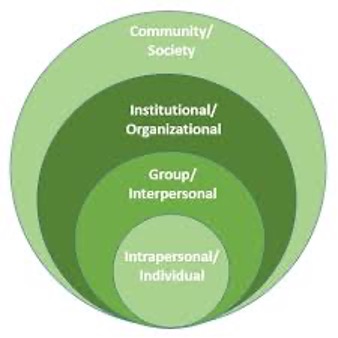 Image: City of Toronto’s Confronting Anti-Black Racism Unit’s UBUNTU Framework
In terms of collecting and parsing data, Dawn and Bailey worked together to build a Black and queer-centred evaluation from scratch. “This was a new experience for both of us,” Dawn shares. “We didn't expect such rich feedback through storytelling, which strongly complemented the quantitative data we collected.”
Queering Black Prairie Futures fills a critical need in beginning to flesh out the diversity within Edmonton’s Black community, shining a light on the uniqueness of the Black experience in Western Canada. Dawn recounts conversations with Edmonton-based academics who have combed databases and come up empty on data relating to Black queer and trans life. “This report is a signpost for solid data in Edmonton,” Dawn says. “Not just for community members, but for researchers as well, who want to take the pulse using information that is by us, for us.”
Above all, this report amplifies a critical truth: Black 2S/LGBTQIA+ people in Edmonton are here. They deserve more than tolerance. They deserve belonging, safety, and joy.
This blog post has been adapted from the President’s Statement in the Queering Black Prairie Futures report.
